THE PLAYBOOK · AGMJZYG
Your guide to Lights Out
Take a moment with Lights Out before moving to another game. Turn every light off. Every supplied starting state is made by valid flips from an all-off board and is therefore solvable. Look at what changes after your first action. Use the opening round to become familiar with the layout. Use the example below to understand a decision.
Give this approach a try
After a move, check what changed. Decide which rule explains the new state before acting again. Use the example to check your reasoning.
Your objective
Turn every light off. Every supplied starting state is made by valid flips from an all-off board and is therefore solvable. An attractive position is not enough unless the goal is met. Return to the instructions when a step is unclear.
How a round unfolds
- Select a light or an unlit tile.
- The selected tile and its orthogonal neighbours switch state.
- Plan flips so that previously cleared rows stay cleared.
- Use Undo to try another approach.
How your actions work
Use the on-screen controls with a mouse or touch. Read a button’s label before selecting it. Look at the feedback after the action.
See the idea in action
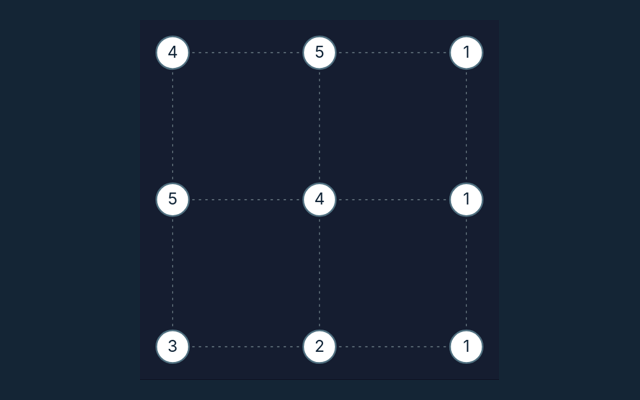
Tapping the centre changes five cells. Tapping a corner changes three. Diagonal neighbours are not affected. Compare this with the rule that governs the move. Keep the controls nearby.
One detail worth checking
An unlit tile can still be tapped; it may be necessary to solve the board. Compare the situation with the worked example. Take enough time to read a new position. If a game has a timer, learn its controls first rather than searching for them during the round.
Further help with the game
As a new player, what is the goal of Lights Out?
Here is the relevant explanation: Turn every light off. Every supplied starting state is made by valid flips from an all-off board and is therefore solvable.
While reading the Guide, how do I control Lights Out?
Here is the relevant explanation: Use the on-screen controls with a mouse or touch.
When I return, what example helps explain Lights Out?
Tapping the centre changes five cells. Tapping a corner changes three. Diagonal neighbours are not affected.
When I return, what should I watch out for in Lights Out?
The key detail is this: An unlit tile can still be tapped; it may be necessary to solve the board.
For a quick reminder, what format does Lights Out offer?
Play using the solo mode shown on this page. Read the controls before starting a new round.
Which play mode does Lights Out use?
The key detail is this: The mode on this page is Solo. Same-device play uses one screen; this game library does not provide internet matchmaking.